
Is TRON Energy Rental Safe? The Short Answer
Yes — TRON energy rental is safe by design, because the mechanism never touches your private keys. When you rent energy, the provider stakes its own TRX and delegates the resulting energy to your public address. Your USDT and TRX stay in your wallet the entire time. The network burns TRX only when a transfer lacks energy, and that burn comes from your wallet's TRX balance, not from the provider's account.
The safety question comes down to one thing: whether the service can access your funds. A legitimate energy rental service needs only your wallet address — the same string you share to receive payments. It never needs your private key, seed phrase, or any signing authority. If a service asks for those, it is not delivering energy; it is attempting a TRON energy rental scam.
What Energy Delegation Actually Does
Energy delegation is an on-chain transaction you can inspect at any time. The provider stakes its own TRX through TRON's Stake 2.0 mechanism, then points the resulting energy at your address. That delegation appears on your account and is visible on Tronscan as a delegation transaction. Nothing moves out of your wallet, and nothing is transferred to the provider.
The provider's TRX stays locked in their own stake. What you receive is the right to use the energy that stake generates. When your transfer consumes energy, the network deducts it from your delegated balance. When the rental period ends, the energy returns to the provider. Your tokens never leave your possession at any step.
How Stake 2.0 Delegation Works
TRON's Stake 2.0 system allows TRX holders to lock their tokens and receive energy or bandwidth in return. The energy can then be delegated to another address. This is a native protocol feature, not a third-party invention. The delegation is recorded on-chain, which means it is public and verifiable.
For a USDT transfer to an address that already holds USDT, the transfer consumes 64,285 energy. That costs 6.43 TRX if burned, which is about $2.12 at the measured TRX price of $0.3294. A transfer to a fresh address that never held USDT consumes 130,285 energy, burning 13.03 TRX or about $4.29. Renting energy avoids that burn entirely.
What a Provider Can and Cannot Do with Your Public Address
A provider with your public address can delegate energy to it. That is the entire extent of their access. They cannot withdraw your USDT, cannot move your TRX, and cannot sign any transaction on your behalf. The address is a destination, not a credential.
What a provider cannot do is equally important. They cannot see your private key, cannot intercept your outgoing transfers, and cannot modify your transactions. The only power they hold is the ability to add energy to your address — and even that expires when the rental period ends. This is why TRON energy without private key is not just possible; it is the only way a legitimate service operates.
The One Hard Rule: Never Share Your Private Key
Any service that asks for your private key or seed phrase to "deliver energy" is running a TRON energy rental scam. There is no legitimate flow where a key could even be used. The delegation mechanism works entirely with public information.
- A real service asks for your TRON address string, nothing more.
- A real service never requests your private key, seed phrase, or keystore file.
- A real service never asks you to sign a transaction that sends TRX or USDT to them.
- A real service's delegation shows up on-chain as a transaction you can verify.
- A real service does not require you to "activate" anything by sharing credentials.
- If any step involves your key, stop immediately — the process is fraudulent.
The rule has no exceptions. Energy delegation targets a public address, and the recipient's private keys are never involved. An honest service has no reason to request them, and a dishonest one has every reason. Treat any such request as conclusive proof of a scam.
Real Risks and How to Handle Them
Even with a legitimate service, real risks exist. They are not about key theft, but about execution and expectations. Understanding them keeps your transfers safe and your costs predictable.
- Paying and not receiving the delegation on time.
- Buying less energy than the transfer actually needs.
- Relying on stale prices from comparison sites or outdated articles.
Paying and Not Receiving the Delegation
The most common failure is paying for energy and not receiving the delegation. This happens when a service is slow, overwhelmed, or simply dishonest. The fix is verification: check your address on Tronscan before you consider the purchase settled. If the delegation transaction is not visible, contact the service or dispute the payment.
Never send a second payment to "fix" a missing delegation. A legitimate service will resolve the issue without additional fees. If they demand more TRX to complete the first order, that is a strong sign of fraud. The delegation transaction is the only proof that matters.
Buying Less Energy Than the Transfer Needs
A USDT transfer consumes a fixed amount of energy depending on the destination. If your rented energy runs out mid-execution, the network burns TRX from your wallet to cover the shortfall. The transaction does not fail — it just costs more than you planned.
This is why knowing the exact requirement matters. A transfer to an address that already holds USDT needs 64,285 energy. A transfer to a fresh address needs 130,285. If you rent 65,000 energy and send to a fresh address, the network burns TRX for the missing 65,285 energy. Check the destination before you rent, and match the amount to the transfer.
Stale Prices on Comparison Sites
Energy rental prices move during the day. A price measured in the morning may not hold by the afternoon. Comparison sites that do not date their measurements can mislead you into paying more than necessary or expecting a rate that no longer exists.
The measured prices in this article come from a single day: 2026-08-04. On that day, Stronara offered 65,000 energy for 1 hour at 30.67 SUN per energy unit, which is 1.97 TRX for a 65k transfer. That saves about 69% versus burning 6.43 TRX. Those numbers are a snapshot, not a promise. Check today's price on the live page before you rent.
Verify Any Energy Purchase on Tronscan in 30 Seconds
Verification takes less than a minute and requires no technical skill. Tronscan shows every delegation transaction on your address, and you can confirm the energy is active before you send your USDT.
- Open Tronscan and enter your wallet address in the search bar.
- Look for the "Energy" section on your account overview page.
- Find the incoming delegation transaction with the provider's address as the source.
- Confirm the delegated energy amount matches what you paid for.
- Check the expiration time to know how long the energy remains active.
- Send your USDT transfer only after the delegation is visible on-chain.
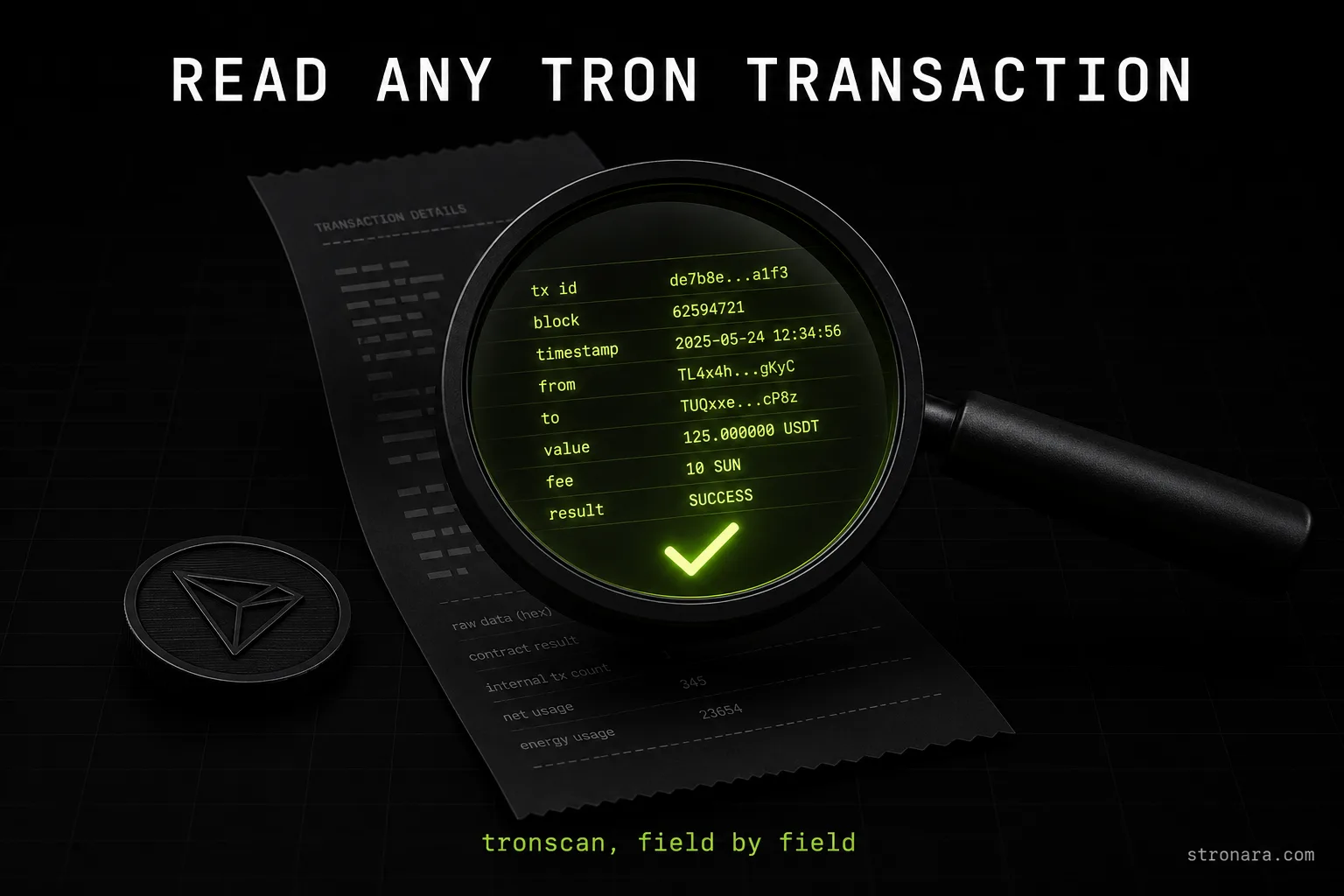
This process works for any provider. The delegation transaction is public, timestamped, and cannot be faked by a screenshot. If you want to understand the full transaction details, our guide on how to read Tronscan transactions walks through each field.
Why We Publish Live Measured Prices
Most articles about energy rental safety offer opinions without data. We take a different approach: every number in this article was measured live on 2026-08-04, and each one is verifiable. The network parameters come from TRON's protocol, and the rental prices come from direct measurement of provider offerings.
The reason is trust through checkability. A claim you can verify is worth more than a promise you cannot. When you can see the delegation on Tronscan, compare the price, and confirm the savings yourself, you do not need to take anyone's word for it.
The Measured Numbers
The table below shows the measured values from 2026-08-04. The network parameters are protocol constants that change only by governance vote. The rental price is a dated measurement and will move.
| Item | Value | Notes |
|---|---|---|
| Network burn rate | 100 SUN per energy unit | Protocol parameter getEnergyFee |
| USDT to existing address | 64,285 energy = 6.43 TRX burned | About $2.12 at $0.3294/TRX |
| USDT to fresh address | 130,285 energy = 13.03 TRX burned | About $4.29 at $0.3294/TRX |
| Stronara rental (1 hour) | 30.67 SUN/unit = 1.97 TRX | For 65,000 energy, measured 2026-08-04 |
| Savings vs burning | About 69% | On that day, for a 65k transfer |
How to Check Them Yourself
The burn rate is a protocol parameter you can look up on-chain. The energy requirements for USDT transfers are visible in the transaction details of any completed transfer. The rental price is published on the Stronara main page, and our methodology page explains exactly how each measurement was taken.
If you want to compare providers side by side, our live comparison of TRON energy providers shows current rates with the same verification standards. The cheapest energy today page is updated when prices move enough to matter.
The Bottom Line: Safety Through Verifiable Data
So is TRON energy rental safe? Yes, when the mechanism is understood and the provider is verified. The protocol delegates energy to your public address without ever touching your keys. Your funds stay in your wallet, and the only thing that changes is your available energy balance.
The safety comes from three practices. First, never share your private key under any circumstances — a legitimate service cannot use it. Second, verify the delegation on Tronscan before sending your transfer. Third, use dated prices and check the live rate before you rent. The USDT transfer fee article explains the $2.12 versus $4.29 difference in detail, and our energy versus bandwidth guide clarifies what each resource pays for.
Energy rental is not about trusting a service. It is about verifying a transaction. The blockchain makes that verification possible for anyone, and the measured data in this article gives you a concrete baseline. Check the numbers, confirm the delegation, and send your transfer with confidence.