
How long does TRON energy last?
The direct answer to how long TRON energy lasts depends on where it came from. Rented energy lasts for the rental period you paid for. The cheapest offers run for 1 hour, while some services sell 1-day and longer windows at different prices. Self-staked energy never expires — it regenerates continuously as you spend it, roughly over a 24-hour cycle.
The distinction changes how you plan a transfer. If you rent, you have a deadline. If you stake, you have a renewable allowance that keeps coming back. Both approaches avoid the network burning TRX from your wallet, but they work on different timelines.
Rented energy: fixed periods and expiry
When you rent energy, a provider delegates their staked energy to your address. You choose the period at purchase. The rental window is the rented TRON energy period — after it ends, the provider reclaims the delegation. Any unused energy goes back to them. There are no refunds for energy you did not spend.
- The 1-hour rental is the standard option for a single USDT transfer
- 1-day and longer periods exist at different prices from various services
- Energy you fail to use within the window is lost — the provider reclaims it
- Delegation and reclaim are ordinary on-chain transactions, visible to anyone
Rental periods and what happens at expiry
When the period ends, the delegated energy returns to the provider's staked balance. Your wallet no longer has access to it. The next transfer you send without energy will burn TRX. This is why timing matters: buy the rental right before you send, not hours ahead.
Cost comparison: burn vs. rent
The table below shows what a USDT transfer costs when the network burns TRX versus what it costs with a rented 1-hour energy package, measured on 2026-08-05.
| Scenario | Energy consumed | TRX cost |
|---|---|---|
| Transfer to existing USDT address, no energy | 64,285 energy | 6.43 TRX burned (~$2.1) |
| Transfer to fresh address, no energy | 130,285 energy | 13.03 TRX burned (~$4.26) |
| Transfer with rented energy (65,000 energy, 1h) | 65,000 energy | 1.97 TRX rental |
The network burns 100 SUN per energy unit when you lack the resource. On the measurement date, renting 65,000 energy for 1 hour cost 30.67 SUN per unit, or 1.97 TRX. That is a saving of roughly 69% compared to burning. Rental prices move during the day, so today's Stronara price is on the main page with the live calculator.
Why 1-hour rentals fit a single transfer
Most people send USDT occasionally, not every hour. For that use case, a 1-hour rental bought minutes before you hit send is the cheapest way to cover the fee. You pay for exactly the window you need and nothing more.
The network burns the full energy cost of a transfer in one shot. A 64,285-energy transfer to an existing USDT address burns 6.43 TRX if you have no energy. Renting that same amount for an hour costs 1.97 TRX on the measurement date. That gap explains why the short rental dominates.
Longer rental periods cost more per unit because you pay for convenience and flexibility. If you only need one transfer today, the extra hours are wasted money. The 1-hour option exists precisely for this scenario. It was the cheapest measured rental on the date of this writing.
Self-staked energy: regeneration over 24 hours
Staking TRX in your own wallet grants a continuous energy allowance proportional to your stake. The key difference from renting is that this allowance never expires. It regenerates gradually as you spend it, which is the TRON energy regeneration mechanism.
- Stake (freeze) TRX to receive an energy allowance proportional to the amount
- Spend energy on transfers; the used portion regenerates over roughly a day
- The allowance never expires while your TRX remains staked
- Unstaking returns your TRX but removes the energy allowance
How staking grants energy
When you freeze TRX in your wallet, the network assigns you an energy allowance based on the size of your stake. This is not a one-time grant. It is a continuous entitlement that renews itself. The network calculates your maximum energy balance, and each transfer draws from it.
Regeneration mechanics
Spent energy does not vanish permanently. It refills gradually over a 24-hour cycle. A wallet that sends several transfers in a day may run low toward the end and recover by the next day. The regeneration rate is a network parameter, not something a provider controls. For a full breakdown of how this compares to bandwidth, see the guide on TRON Energy vs Bandwidth.
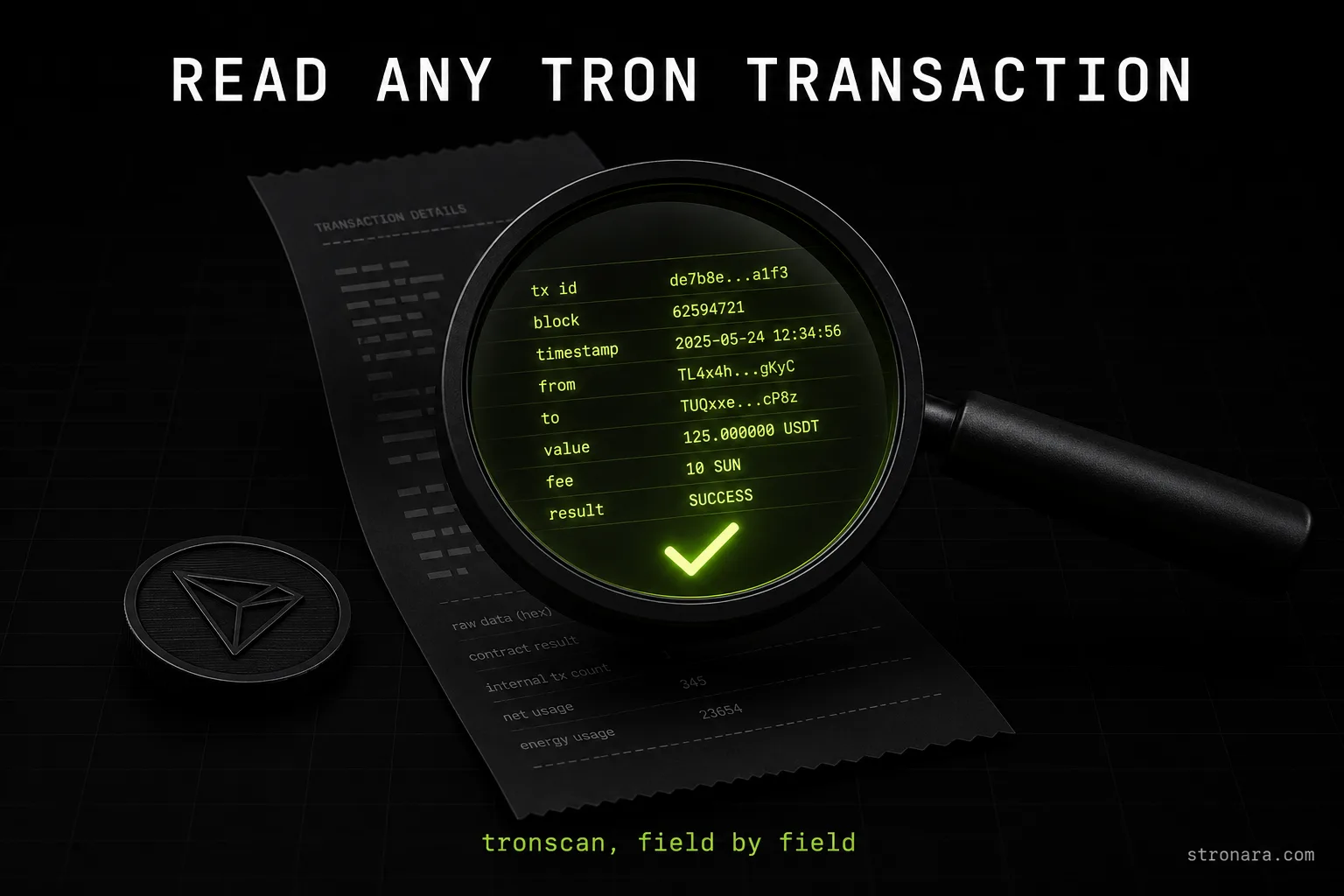
Check delegation and reclaim on Tronscan
Every delegation and reclaim operation is a public on-chain transaction. You can verify exactly when your rented energy period starts and ends by looking up your address on Tronscan.
Open the transactions tab for your wallet. Filter for delegate or undelegate operations. The delegate transaction shows the provider sending energy to your address. The undelegate shows the reclaim when the period ends. This transparency means you can confirm the rented TRON energy period yourself rather than trusting a receipt.
For a step-by-step walkthrough of reading these transactions, the guide on how to read Tronscan transactions walks through the exact fields to check.
Practical rule: rent or stake by your use case
Your choice between renting and staking comes down to how often you send. A single transfer needs a 1-hour rental. Daily sending might justify longer periods or a stake, depending on the live prices.
One-off transfer checklist
- Check today's rental price on the live comparison page
- Buy a 1-hour rental of 65,000 energy right before sending
- Send your USDT transfer within the window
- Verify the transaction on Tronscan to confirm no TRX was burned
Daily transfer considerations
If you send USDT every day, compare repeated 1-hour rentals against a longer period or a self-stake. A stake locks your TRX but gives you a renewable allowance with no expiry. The right answer depends on current rental rates and your transfer volume. The USDT transfer fee guide has the current numbers to work from.
Quick answers on TRON energy duration
Does TRON energy expire? Rented energy expires at the end of the period you paid for. Unused energy is reclaimed without refund. Self-staked energy does not expire — it regenerates over roughly 24 hours.
How long does a rented energy period last? The shortest standard period is 1 hour. Some services offer 1-day and longer windows at different prices. The 1-hour option is the cheapest measured for a single transfer.
What happens when my rented energy runs out? The provider reclaims the delegation. Your next transfer without energy burns TRX at 100 SUN per unit. This is why the timing of your purchase matters.
Can I extend a rental? You would need to buy a new rental after the current one ends. The old delegation is reclaimed on schedule. A fresh purchase starts a new window.
How fast does staked energy regenerate? Spent energy refills gradually over approximately a day. The exact rate depends on network parameters, which can change by governance vote.
That is the full picture of how long TRON energy lasts: rented energy has a deadline, staked energy renews itself. The right choice depends on how often you transfer. For a deeper look at why the fee exists in the first place, see the breakdown of why the TRX gas fee is so high.