
Tron Out of Energy: What Caused Your Failed USDT Transfer
If your USDT transfer on TRON failed with an "out of energy" message, the network could not run the smart contract. Your account lacked the required energy. Every USDT TRC-20 transfer needs a specific amount of energy to execute. When your wallet has too little energy and not enough TRX to burn as a substitute, the transaction reverts. You see the "TRON out of energy" error.
The direct fix is to add energy to your address before sending. You can rent energy from a provider for a fraction of the cost of burning TRX. Or you can hold extra TRX to cover the burn fee. Neither is risky if you rent from a reputable service — you never share your private keys. Below we walk through why the error happens and how to resolve it.
Why the Out-of-Energy Error Occurs
A USDT transfer is not a simple coin send. It runs a smart contract, which consumes energy. When your account runs out of energy mid-execution, the network attempts a fallback: burning TRX to cover the missing units. If that fallback also fails, you get the out-of-energy failure.
Energy Requirements by Recipient Type
The amount depends on whether the recipient already holds USDT:
- Sending to an address that already holds USDT: 64,285 energy required.
- Sending to a fresh address that has never held USDT: 130,285 energy required.
If your wallet does not have enough energy, the network tries to burn TRX to cover the difference. The amount of TRX burned is calculated using the network parameter getEnergyFee, which is 100 SUN per energy unit. Since 1 TRX = 1,000,000 SUN, burning 64,285 energy costs 6.43 TRX (about $2.11 at the current TRX price of $0.3279). For a fresh address, it costs 13.03 TRX (about $4.27).
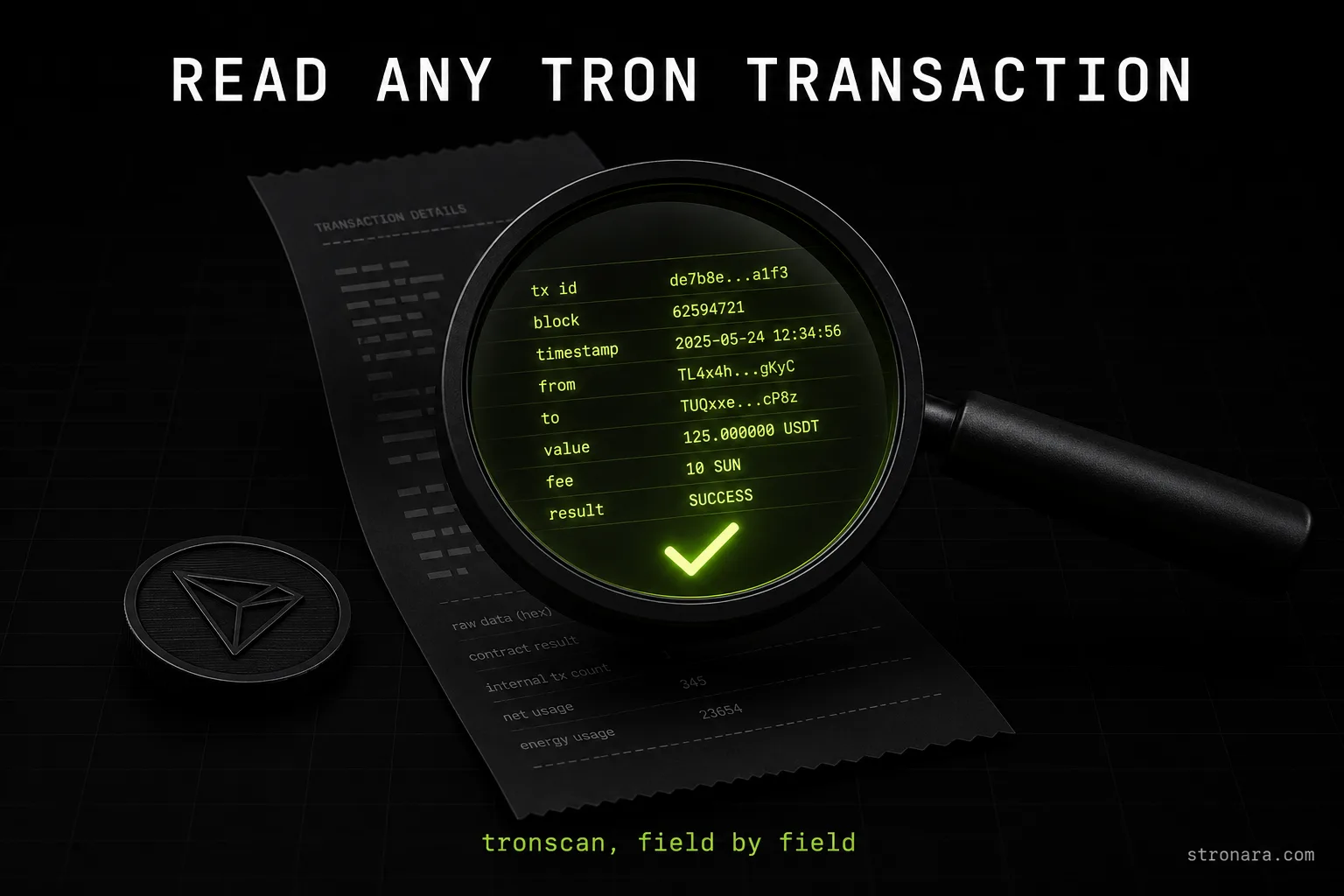
If your wallet's fee limit or TRX balance is too low to cover the burn, the entire transaction fails with "TRON out of energy." You can verify this by finding your failed transaction on Tronscan. Check the energy_usage_total and contract result fields. Understanding what those fields mean is easier after reading How to Read Tronscan Transaction: Verify Your USDT Fee.
The 30-Second Fix
The quickest way to fix a failed transfer is to rent energy before resending. Energy rental adds the required energy to your address for a limited time (typically one hour). The transaction then succeeds without burning TRX. This approach directly addresses the out-of-energy condition rather than working around it.
Check Your Recipient's Status
First, determine whether your recipient is funded or fresh. The details are in How Much Energy USDT Transfer Needs: 65k or 131k. You can use an address checker that queries the network live. For example, the calculator at Stronara tells you the exact energy needed. Then rent that amount from a provider available today. This saves about 68% compared to burning 6.43 TRX.
- Some providers charge more per unit, so compare prices.
- Others charge even more, so check the current market.
- And some charge the most, so always compare.
Rental prices vary between services and change over time. These are live measurements from August 3, 2026, not future promises. Always compare current rates before renting. After the energy is delegated to your wallet, you can resend the USDT transfer. The transaction will use the rented energy and succeed. For a broader look at what different providers charge, see Best TRON Energy Providers in 2026 — Live Rental Comparison.
How to Check What Went Wrong
Diagnosing the exact cause of your out-of-energy error takes two steps. Inspect the failed transaction and check your wallet settings. Both are quick and give you a clear picture of what to change.
Inspect the Transaction on Tronscan
To confirm why your transfer failed, look up the transaction hash on Tronscan. The details page shows:
- energy_usage_total: the amount of energy the transaction attempted to use.
- Contract result: if it says OUT_OF_ENERGY, the network could not cover the shortfall.
Also check your wallet's fee limit setting (common in wallets like TronLink). If the fee limit is set too low — for example, below the TRX burn cost — the transaction will fail even if you have enough TRX. Raising the fee limit to at least the required burn amount (6.43 TRX or 13.03 TRX) can allow the burn to complete. However, renting energy is much cheaper than burning. The full cost breakdown of both paths appears in USDT TRC-20 Transfer Fee in 2026: Actual Cost & Savings.
You can also use a live address checker to know in advance whether a recipient is funded or fresh. This avoids guessing the 65k vs 131k requirement. It prevents the out-of-energy situation before it happens.
How to Prevent It Next Time
Once you understand the energy system, preventing the error is straightforward:
- Keep a small TRX buffer in your wallet so the network can burn what it needs. For a funded recipient, 6.43 TRX is enough. For a fresh recipient, 13.03 TRX. But burning is expensive — renting is cheaper.
- Rent energy before each transfer. If you send frequently, rent a larger amount that covers multiple transfers within the rental period.
- Check your wallet's fee limit. In TronLink, the default "fee limit" is sometimes too low for a fresh-address transfer. Set it to at least the burn cost or leave it high enough to cover the rental scenario.
Renting energy from a provider delegates the energy to your address without giving them control of your funds. You can see how this compares to burning in TRON Energy vs Bandwidth: What Each Resource Pays For. The rental cost (2.03 TRX for a 65k transfer from the cheapest provider measured on August 3, 2026) is a fraction of the burn cost (6.43 TRX). Over many transfers, the savings add up. If you are still deciding whether you need TRX at all, Do I Need TRX to Send USDT? answers that question directly.
Wallet-Specific Note: TronLink Fee Limit
If you use TronLink, the "fee limit" field controls how much TRX the wallet is allowed to burn. By default, it may be set to a low value like 10 TRX. For a fresh-address USDT transfer that requires 13.03 TRX to burn, this can cause a "TRON out of energy" failure. The limit is simply insufficient. Always increase the fee limit to at least 20 TRX — that gives a comfortable margin. Or better, rent energy and set the fee limit to a minimum value (like 1 TRX) since the rented energy covers the cost.
Remember: the numbers in this article are live measurements from August 3, 2026. TRX price, network fees, and rental rates change. Always check the current rates and your recipient's status before sending. The tools at Stronara and Tronscan give you the data you need to avoid the "TRON out of energy" error entirely. For a deeper look at why the underlying fees are structured this way, Why Is TRX Gas Fee So High? The Real Reason (with Numbers) explains the mechanics behind the burn.